Track Saw Questions & Technique
What Is a Track Saw, and How Does It Work?
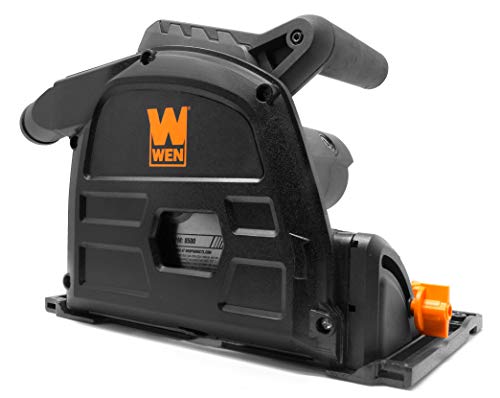
A track saw is a circular saw designed to travel along a compatible guide rail. Many woodworking versions also plunge: the blade lowers into the work to a selected depth, then retracts into its housing. The combination makes straight panel cuts easier to position, but the rail, blade and support arrangement still determine the result.
As an Amazon Associate I earn from qualifying purchases. How affiliate links work.
Inspect the relevant offer

Makita SP6000J 6-1/2-Inch Plunge Circular Saw
Check Amazon offerThe saw moves; the sheet stays supported
Picture cutting a cabinet side from a full sheet of plywood. With a track saw, the sheet stays on a stable cutting surface while you bring the saw to the line. That reverses the workflow of feeding a sheet across a table saw. It can be a practical advantage in a garage where handling a large panel through a stationary machine would require clear space on both sides. You still need room to support the sheet and walk the complete cut.
What the rail actually controls
The rail establishes the direction of travel through the matching channels in the saw base. Adjustable guides, where provided, reduce sideways movement without making the saw bind. A replaceable strip along the cut edge provides a reference after it has been trimmed for the actual saw and blade. It is a calibrated edge, not a ruler that remains correct for every blade or saw you might borrow. The rail cannot make a bowed workpiece flat or correct a misplaced layout line.
Why plunge action matters
A plunge mechanism allows an appropriate saw to begin a permitted cut inside a panel rather than only at its edge. That is useful for some openings, but internal cuts demand more planning than a simple through-cut. You need to know what is underneath, how the cutoff is supported and where the circular blade reaches below the surface. For a newcomer, the plunge feature is best understood as another controlled operation to learn from the exact manual, not permission to lower a blade anywhere.
Where the system earns its place
Panel breakdown, straight furniture parts and trimming a suitable door are common reasons to buy one. Long angled lines are also easier to arrange when the guide can be positioned on the work. Repeated narrow strips introduce a different problem: holding and supporting small stock under a wide rail. A track saw can complement a table saw rather than replacing every table-saw task. Consider your actual sequence from rough sheet to finished component before deciding which machine saves the most handling.
The purchase includes more than a motor
A bare saw, saw-and-rail package and complete cutting station are different purchases. Check the required rail length, clamps, extraction connection, blade and support surface. A cordless kit may include batteries while a similar listing is tool-only. Compare the whole usable setup against your budget. Spending everything on the saw and balancing expensive plywood on inadequate supports is a poor allocation; reliable workholding and a matching rail are part of the system that produces the cut.
Start with a measurable practice project
An uncomplicated plywood rectangle teaches more than a pile of unfamiliar accessories. Mark the reference edge, plan the waste side and make a trial cut using the manufacturer's setup procedure. Then measure both ends, check straightness and inspect the edge for chipping. If something is wrong, distinguish an angle error from a rough edge before changing settings. This approach tells you whether the limiting factor is layout, blade choice, rail fit or support, and guides the next purchase toward a real need.
Questions about What Is a Track Saw, and How Does It Work
Is a track saw the same as a plunge saw?
The terms overlap, but describe different features. Track refers to guided travel; plunge refers to the blade-lowering mechanism. Check the individual product rather than assuming every guided circular saw has a plunge function.
Does a track saw replace a table saw?
It can handle many sheet-cutting jobs, but repetitive narrow rips and some joinery favor other equipment. Compare the tasks you perform most often and the workholding each requires.
Do you need a special table for a track saw?
Not necessarily. You need a stable support arrangement that suits the work and permits blade clearance. A dedicated table can improve repeatability, but the manual's support requirements still apply.
Why are some track saws left-bladed?
Blade position is a design choice, not a rule that all track saws are left-handed. Kreg describes its ACS blade-left layout as optimized for right-hand users. Compare handle access, sight lines and the exact operating instructions rather than assigning handedness from blade position alone.