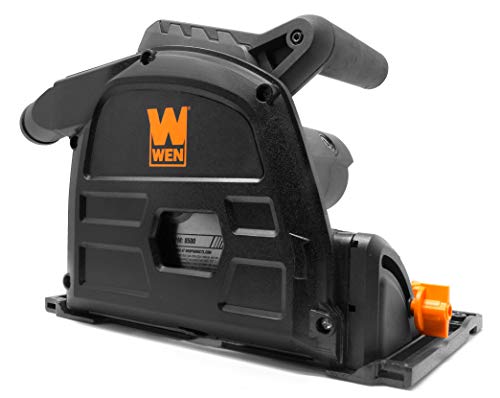
Track Saw Comparisons
Track Saw vs Circular Saw: Is the Upgrade Worth It?
A dedicated track saw makes sense when controlled sheet cutting becomes a regular task. A conventional circular saw remains useful for general cutting, especially if you already own one and only need occasional straight panel cuts. The upgrade buys an integrated guiding and cutting arrangement, not automatic accuracy. We compare the design choices here without claiming a hands-on shootout.
As an Amazon Associate I earn from qualifying purchases. How affiliate links work.
Inspect the relevant offer

Makita SP6000J 6-1/2-Inch Plunge Circular Saw
Check Amazon offerThe guide is only part of the difference
A straightedge can guide the shoe of a circular saw, but you generally must allow for the distance between that shoe edge and the blade. A compatible track-saw rail instead provides a dedicated path for the saw. Its trimmed splinter strip can serve as a cutting reference. That makes repeated setup easier to understand, although the strip and blade combination must remain correctly calibrated.
Dedicated plunge models also control how the blade enters the material. Adding a rail sled to an ordinary circular saw does not convert its guard and depth mechanism into that of a purpose-built plunge saw. Use the procedure supplied for the actual tool.
Occasional plywood cuts may not justify another motor
If you make a few rough panel cuts each year, try a sound guide system compatible with your existing circular saw before replacing the saw. Check the shoe fit, guide length and blade suitability. The improvement may come from supporting the sheet properly and using a blade intended for its surface rather than buying a different motor.
This approach has limits. Time spent measuring shoe offsets, checking sled movement or resetting a straightedge can accumulate during a cabinet build. Evaluate the number of setups, not only the number of sheets purchased.
Look closely at dust and exposed cut edges
A track saw commonly surrounds more of the blade and provides an extraction connection. That can suit indoor panel work, but actual collection depends on the saw, hose, extractor, material and type of cut. Do not read a manufacturer’s percentage as a guarantee for every arrangement.
A visible cabinet edge raises a different concern from a rough framing cut. Blade condition, tooth geometry, feed control and splinter-strip condition all affect the result. Test on matching scrap before assigning the show face or committing an expensive panel.
Portability does not settle this comparison
Both types can travel to a job. The track-saw package additionally includes rails that need protection from bends and edge damage. A circular saw may pack into a smaller space, while a long rail may avoid repeated straightedge setups. Check your vehicle and storage space before choosing the longest rail available.
Cordless models still need a battery plan; corded models need suitable power and cable routing. These power-source decisions are separate from whether the saw is dedicated to a rail.
Where the extra money becomes useful
Choose the track saw when you repeatedly need finished panel edges, direct cut-line placement and a consistent system for long straight cuts. Keep or choose the circular saw when varied general cutting and lower initial spending matter more. For a combined workshop, the circular saw can retain rough-cut duties while the track saw handles layout-sensitive panels.
Compare complete baskets. A low saw-only price omits a guide, and a guide attachment may require clamps or an extension. List everything needed for your longest intended cut, then compare the totals against the time and material the setup is likely to save.
Questions about Track Saw vs Circular Saw: Is the Upgrade Worth It
Is a circular saw with a guide as accurate as a track saw?
It can make accurate straight cuts with suitable setup. The main difference is how the tool is guided and how much alignment work the arrangement needs, not a universal accuracy ranking.
Does a track saw replace a circular saw?
It can replace some straight-cut duties. General-purpose cutting, awkward access and tasks outside the track-saw manual may still favor another saw.
Can any circular saw fit a track?
No. Confirm the exact saw shoe and guide or sled compatibility. The presence of a flat base does not establish a secure, approved fit.