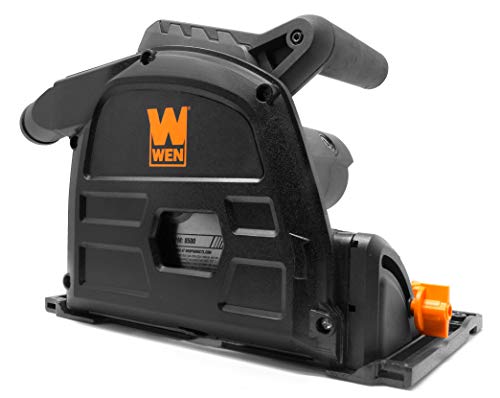
Track Saw Questions & Technique
How to Cut Melamine and Laminate With a Track Saw
Melamine and laminated panels need more than a straight guide: the brittle surface must survive the cut on the faces that matter. A compatible fine-finish blade, a sound splinter-control setup and a trial cut help establish the right approach. Identify the actual panel construction before applying advice intended for a different decorative surface.
As an Amazon Associate I earn from qualifying purchases. How affiliate links work.
Inspect the relevant offer

Makita SP6000J 6-1/2-Inch Plunge Circular Saw
Check Amazon offerKnow which surface you are cutting
Melamine-faced particleboard, high-pressure laminate bonded to a substrate and thin loose laminate sheets behave differently. The substrate affects support and the surface affects chipping. Check the material supplier's machining guidance and choose a saw and blade approved for that product. Do not treat a track-saw application list as approval for every composite sold under the word laminate. Note which faces and edges will remain visible after assembly, because that determines where a small chip is unacceptable.
Inspect the cutting reference closely
A torn or poorly calibrated rail strip can leave the visible coating unsupported at the cut. Examine the full working length, particularly a frequently used entry area and any rail joint. If a different saw or wider-kerf blade previously trimmed the strip, the remaining edge may no longer correspond to the current blade. Replace or recalibrate it using the rail manufacturer's instructions. Masking tape may help with marking on some finishes, but it does not repair a missing or misaligned support strip.
Use a test that resembles the real job
A trial cut should use an offcut of the actual panel, the intended blade and the same face orientation. A clean result on ordinary plywood does not validate a melamine setup. Inspect both top and bottom edges in good light, then compare the cut to the required finish. If both faces will be exposed, evaluate both rather than accepting the cleaner side alone. Label the successful test with the blade and setup so you can repeat it after moving to the full panel.
Scoring depends on the machine
Some saws provide a shallow scoring stop or a prescribed scoring procedure. Use that procedure only as documented for the exact model and material. Do not assume that online advice to drag a spinning saw backward is appropriate for your tool. A scoring pass that does not align precisely with the final kerf may leave an unwanted witness line. Compare a permitted scoring setup against a normal trial cut before adding an extra pass to every component in the project.
Avoid movement at the last inch
Secure support matters most when the remaining connection between the retained panel and offcut becomes small. A dropping offcut can chip the corner even when the rest of the cut looks excellent. Arrange support without pinching the blade, keep the rail stable and make sure the hose does not tug at the finish. For an expensive countertop blank, plan handling and corner completion as separate operations instead of assuming the track saw alone can produce every part of the final shape.
Decide what will be finished afterward
An edge destined for banding may need a different finishing allowance from an exposed laminate edge. Follow the project's joinery and edge-treatment requirements when choosing the final dimension. If a test shows damage deeper than that allowance, correct the cutting setup rather than hoping the edge treatment will conceal it. Record whether the problem is face chipping, a ragged substrate or a dimensional error; those observations lead to different changes and prevent unnecessary replacement of a perfectly suitable rail.
Questions about How to Cut Melamine and Laminate With a Track Saw
What blade should I use for melamine?
Choose a blade approved for the exact saw and decorative panel, with the required diameter, bore, kerf and speed rating. Tooth count alone does not establish compatibility or guarantee a chip-free result.
Does tape prevent all track-saw tearout?
No. Tape is not a substitute for the right blade, stable support and a correctly trimmed splinter strip. Test it only where the material's finish tolerates the adhesive.
Should I always score laminate first?
Only when the saw and material instructions support that procedure and the trial cut benefits from it. Scoring settings and permitted direction are model-specific.