Track Saw Comparisons
Track Saw vs Panel Saw: Portable or Production Setup?
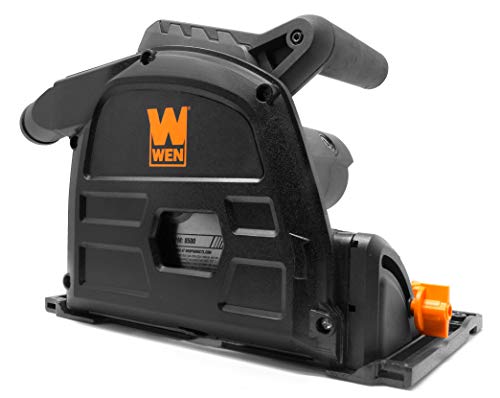
A track saw offers flexible cutting with a portable rail. A vertical panel saw provides a dedicated station for repeatedly sizing sheet goods. The better choice depends on sheet volume, material handling and permanent shop space. A small footprint claim should never replace measuring the actual loading and working area. This is a researched workflow comparison, not a production trial.
As an Amazon Associate I earn from qualifying purchases. How affiliate links work.
Inspect the relevant offer

Makita SP6000J 6-1/2-Inch Plunge Circular Saw
Check Amazon offerCount how often sheets enter the shop
An occasional cabinet project may involve only a few panels and an afternoon of layout. A track saw can suit that pattern because the support surface can serve other purposes afterward. A business processing sheets repeatedly has a different cost: every loading, measuring and resetting step adds labor.
Before considering a panel saw, record a normal week’s panel work. Include changes in material thickness and whether sheets arrive whole or already rough-sized. A dedicated machine is easier to justify when it solves a recurring handling problem rather than an imagined future workload.
Vertical support changes material handling
A vertical panel saw supports the sheet in its intended cutting station. Manufacturer documentation highlights the value of this arrangement for panel processing. The practical benefit for your shop depends on how sheets reach the machine and how cut parts leave it.
Check door access, cart routes and storage on both sides of the station. A machine may occupy less floor depth than a large horizontal surface while still requiring substantial clear width. Heavy sheets can require assistance or handling equipment regardless of the saw type.
Track placement buys flexibility
A portable track can follow a straight line placed at different locations or angles on a supported sheet. That helps with unusual panel shapes and work away from the main shop. It also means the operator establishes each reference unless an appropriate repeat-cut accessory is used.
For a panel saw, inspect the exact supported operations and adjustment range. Do not assume every vertical system handles every bevel, angle, thickness or small component. Production convenience for standard sizing can coexist with the need for another tool on unusual work.
Accuracy belongs to the entire station
A rail that shifts or a sheet that sags can spoil a track-saw cut. A panel saw likewise depends on alignment, blade condition and correct work support. Buying a larger machine does not eliminate setup checks.
If final dimensions are critical, define an acceptance procedure before production: check representative test parts for size and squareness and inspect the intended show edge. This is more useful than treating an advertising tolerance as a guaranteed finished-cabinet tolerance.
Budget beyond the purchase price
For a track system, include rails long enough for the cut plus the manufacturer’s required travel allowance, connectors where appropriate, clamps, extraction and a suitable support surface. For a panel station, add installation needs, extraction, material handling and the permanent space it occupies.
Choose the portable system when flexibility and infrequent use dominate. Investigate a panel saw when repeat sheet processing and handling efficiency justify a dedicated station. Keep the comparison grounded in a real cut list: the cheapest purchase can be expensive to operate, while an impressive machine can sit unused if its capacity does not match the incoming work.
Questions about Track Saw vs Panel Saw: Portable or Production Setup
Is a panel saw more accurate than a track saw?
There is no universal result. Alignment, support, blade choice and the operator’s process affect both systems. Compare exact machines and verify representative parts.
Can a track saw handle full sheets?
A suitable rail arrangement and support surface can allow full-sheet cuts. Rail length must include the travel allowance required by the saw rather than merely equal the sheet dimension.
Does a vertical panel saw need very little space?
Measure the complete loading, cutting and unloading area. The machine depth alone omits sheet movement, operator clearance and material storage.