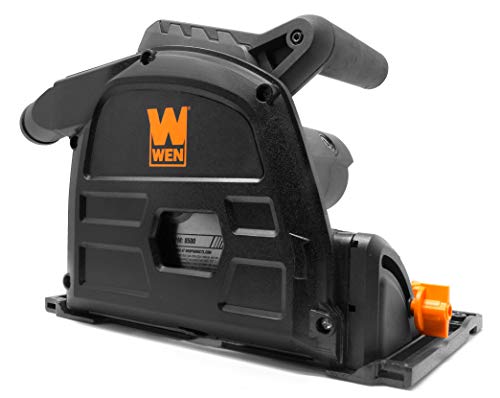
Track Saw Comparisons
Track Saw vs Jigsaw: Straight Panels or Curved Cuts?
A track saw is built around a guided circular blade for straight cuts. A jigsaw uses a narrow reciprocating blade that can follow suitable curves. The tools overlap on some openings and panel cuts, but their strongest applications differ. This comparison is based on documented functions and cutting geometry, not measured results from our own workshop.
As an Amazon Associate I earn from qualifying purchases. How affiliate links work.
Inspect the relevant offer

Makita SP6000J 6-1/2-Inch Plunge Circular Saw
Check Amazon offerA curve makes the first decision easy
A track establishes a straight line. It cannot guide the circular blade around a curved template. A jigsaw is the relevant category when a project includes rounded corners or shaped outlines, provided the blade and material are appropriate.
The curve radius and thickness still matter. A blade that follows a line on the top face may not remain square through thick stock if it deflects. Do not choose a jigsaw solely because the outline looks easy to draw. Allow for finishing when the edge must be especially clean or perpendicular.
Long panel edges favor a stable reference
For a cabinet side or shelf edge, the track-saw rail supplies the continuous straight reference. A jigsaw can make straight cuts, but a long finished edge places different demands on blade support and control. The track system is worth investigating when long straight dimensions dominate the cut list.
Good support remains essential. A damaged rail, unsuitable blade or unsupported offcut can undermine the result. A track is not a replacement for checking that the intended keeper side, cut line and waste side have been identified correctly.
Openings may require both tools
A suitable plunge track saw can make the straight portions of an interior opening under its manual’s procedure. Because its blade is circular, the cut extends differently below the surface than the visible top line. A jigsaw can be useful for completing corners without extending the straight saw cut into the surrounding material.
That does not make every cutout an automatic two-tool job. Material instructions, access, support and corner requirements determine the method. Plan where the cutout will be supported so it does not drop or pinch a blade as the last connection is removed.
Blades are application choices
Jigsaw and track-saw blades are fundamentally different consumables. Choose the correct mounting system and a blade rated for the tool, material and operation. Tooth count by itself is not a complete selection method.
For surfaced panels, test the intended blade on matching scrap and inspect the face that will remain visible. If the project requires an edge ready for a specific finish or joint, include any subsequent trimming or sanding in the workflow. Neither machine should be bought on a blanket promise of zero tear-out.
Plan the edge that remains visible
When a curved and straight edge meet on the same component, decide how their finish will be made consistent. The two tools can leave different surfaces, and the required final appearance may include a separate finishing step. Keeping that step in the plan helps avoid expecting either saw to solve every geometry and finish requirement by itself.
Choose the next tool from the cut list
A builder making mostly shelves and rectangular cabinets can reasonably prioritize the track saw, then add a jigsaw for curves and suitable corner work. A maker producing shaped decorations or curved parts may need the jigsaw first and use another straight-cutting arrangement for initial sizing.
Price the complete job, including guides, clamps, support and replacement blades. A less expensive jigsaw does not become a track saw because a straightedge is placed beside it, and an expensive track saw does not remove the need for a curved-cutting tool. The useful combination follows the project rather than a brand ranking.
Questions about Track Saw vs Jigsaw: Straight Panels or Curved Cuts
Can a jigsaw replace a track saw?
It can complete some of the same cuts, but long straight finished panel edges are a different demand from curved or detailed cuts. Evaluate the result the project needs.
Can a track saw cut curves?
A conventional track saw follows straight guide paths. Use an appropriate curved-cutting tool for curved outlines.
Which is useful for a sink opening?
The worktop material and tool instructions determine the method. Straight portions and corners can require different tools, and the cutout needs planned support.