Track Saw Care & Setup
Track-Saw Blade Changes: Compatibility and Final Checks
Changing a track-saw blade is a model-specific maintenance operation. Use the exact manual for the locking sequence, fasteners and installation details. Before opening the housing, confirm that the replacement blade meets every required specification and suits the material. A blade that fits the arbor is not necessarily a safe or useful match.
As an Amazon Associate I earn from qualifying purchases. How affiliate links work.
Inspect the relevant offer

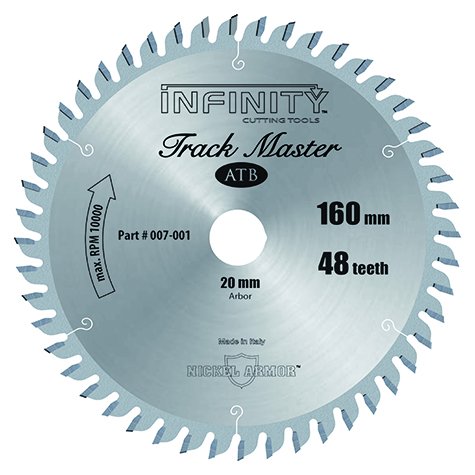
Milwaukee 48 Teeth Fine Finish Track Saw Blade, 165 mm Blade
Check Amazon offerWrite down the full compatibility requirement
Check diameter, bore, permitted kerf, blade-body thickness, speed rating and any required relationship to a riving knife. Include the material and cutting task in the selection. Do not choose only by tooth count or by a marketplace title containing the words track saw. Different generations from the same brand can use different blade specifications. Save the exact saw model and approved requirements where you order consumables so the next purchase does not start from a vague recollection of the blade size.
Decide whether replacement is the right maintenance
Poor cutting can come from buildup, dullness, damage or an unsuitable blade, but also from rail and support problems. Inspect the evidence before buying another blade. A damaged blade should not be returned to service for a trial. Cleaning or professional sharpening may be appropriate for some serviceable blades when their manufacturers permit it, while other cases call for replacement. Keep the blade's condition separate from the saw's alignment; changing a consumable will not repair a bent base or damaged rail.
Isolate power and follow the exact mechanism
Disconnect the plug or remove the battery as the manual requires before changing accessories. Use the prescribed blade-change position, lock and supplied or specified tool. Do not copy the direction of a fastener or a locking sequence from another brand. If the mechanism does not behave as documented, stop rather than forcing it. Keep removed parts organized and inspect the mating surfaces through the approved procedure so a washer or flange is not installed incorrectly during reassembly.
Preserve the intended mounting arrangement
Install only the specified parts in the correct orientation and use the manufacturer's tightening instructions. Do not add improvised spacers or modify the guard to accommodate a blade. Confirm that any riving knife remains compatible and correctly configured according to the manual. A missing or damaged mounting component needs the proper replacement, not a nearby washer that appears to fit. Service parts should be identified by the exact model and revision when the manufacturer distinguishes them.
Check the rail reference after the change
A new blade can change the actual kerf relative to the trimmed splinter strip. Inspect that relationship before lining up a finished dimension. If the strip no longer supports or marks the intended edge, follow its replacement or calibration procedure. This is particularly important when switching between blade types or sharing a rail among saws. The blade change may be mechanically correct while the old zero-line assumption becomes inaccurate, producing a clean cut on the wrong side of the measurement.
Validate on suitable scrap
Complete the manual's post-installation checks before powering the tool, then make a controlled trial in appropriate material. Evaluate cutting effort, edge quality and the retained dimension. If there is unusual noise, vibration or resistance, stop and investigate rather than assuming the blade needs to wear in. Record the blade model and its successful application for future purchases. That record is more useful than a generic claim that one blade is best for every plywood, hardwood and laminate job in the shop.
Questions about Track-Saw Blade Changes: Compatibility and Final Checks
Can I fit any blade with the right diameter and hole?
No. Kerf, body thickness, speed rating and riving-knife compatibility may also be specified. Check every requirement for the exact saw.
Which way does the arbor bolt loosen?
Follow the exact model's instructions. Do not apply a generic direction from another saw; the locking and fastener arrangement must be identified correctly.
Why did my dimensions change after a blade replacement?
The new blade's kerf may no longer match the rail's trimmed reference. Verify the relationship on scrap and recalibrate or replace the strip as directed.