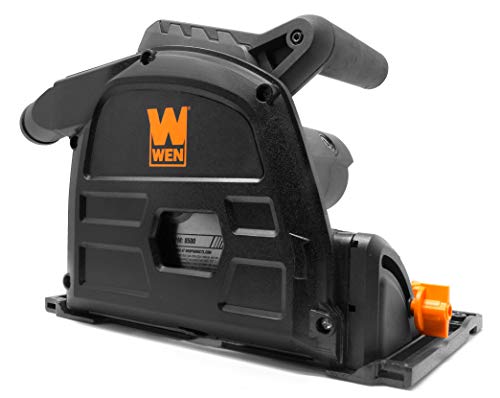
Track Saw Troubleshooting
Why Is My Track Saw Binding or Hard to Push?
A saw that is hard to move may be dragging on its rail, or its blade may be binding in the material. Those are different problems with different risks. Stop the operation according to the manual, allow the blade to stop and disconnect power before investigating. Do not use extra force as a diagnostic method.
As an Amazon Associate I earn from qualifying purchases. How affiliate links work.
Inspect the relevant offer

Makita SP6000J 6-1/2-Inch Plunge Circular Saw
Check Amazon offerSeparate sliding resistance from cutting resistance
With power disconnected and the blade safely retracted, check the saw's permitted travel on the rail. If it is difficult even without cutting, investigate the guide fit, dirt, rail damage or a connector transition. If travel is smooth in that condition but resistance appears during the cut, focus on the work, blade and operating setup. This distinction prevents unnecessary motor concerns when the actual problem is a tight guide, and prevents a blade problem from being hidden by loosening the base excessively.
Inspect the contact path along its full length
A tight spot at a joined rail can indicate misalignment or damaged hardware. A gritty feeling may come from debris on the running surfaces. Clean and inspect the system according to the manufacturer's maintenance guidance, then set the guide adjustments as directed. Do not apply random lubricants to make a damaged rail feel smoother; contamination can affect grip strips and the workpiece. If the rail is visibly distorted, follow repair or replacement guidance instead of trying to force the saw past the defect.
Look at support and the changing kerf
During cutting, a panel can sag or an offcut can move so that the kerf closes on the blade. Solid wood may also release internal stress. Examine how both pieces are supported near the cut and at completion. Correct the arrangement using the saw manual's requirements. A rail clamp prevents certain movements but cannot guarantee that the material will not pinch the blade underneath. Do not continue a troublesome cut merely because the track itself still appears firmly attached.
Confirm blade and riving-knife compatibility
Check the installed blade against the exact saw specifications, including any required relationship to a riving knife. Body thickness and kerf can matter even when diameter and arbor fit. Inspect for damage and contamination through the approved maintenance procedure. If resistance began immediately after a blade change, treat that timing as useful evidence. Do not remove or alter a protective component to accommodate an unsuitable blade. Restore a documented compatible configuration before deciding whether the saw needs further service.
Consider the load without blaming your feed speed first
Thick dense stock, a blade intended for another task or a long demanding rip can increase cutting effort. Verify the material and on-rail depth are within the tool's approved application. Follow the manufacturer's operating guidance rather than forcing a fixed pace from another saw or a video. If the machine stalls, overheats or behaves unusually, stop and investigate. A more powerful battery or a slower push is not a universal cure for pinching, damaged teeth or an incompatible blade.
Make the next cut a controlled test
After the cause is corrected, use suitable scrap and a stable setup to confirm smooth operation. Keep the rail, blade and material conditions documented so the result is interpretable. If the cause remains uncertain, consult the manufacturer or a qualified service provider rather than repeatedly restarting in the same problematic kerf. Report whether the resistance occurs with the blade retracted, at a particular rail location or only in specific stock. Those distinctions make diagnosis much more efficient than saying the saw feels weak.
Questions about Why Is My Track Saw Binding or Hard to Push
Should I push harder when the saw slows down?
No. Unexpected resistance warrants stopping and diagnosis according to the manual. Forcing the saw can worsen loss of control and does not distinguish rail drag from blade pinching.
Why does my saw bind only at the rail joint?
Check for a step, kink, connector issue or damaged running surface. Disconnect power and correct the rail alignment using the manufacturer's procedure before another cut.
Can wood movement cause binding even on a clamped rail?
Yes. The material can move around the blade while the rail remains fixed. Support and stock condition need attention independently of rail clamping.