Track Saw Questions & Technique
How to Plan a Plunge Cut With a Track Saw
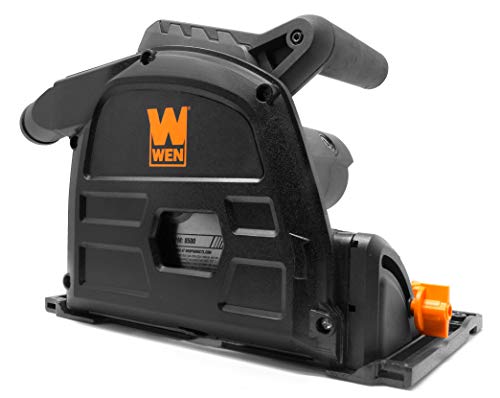
A plunge-capable track saw can start an approved cut within a panel, but internal openings need a different plan from edge-to-edge cuts. You must account for the circular blade below the surface, secure the rail and support the waste. Follow the exact saw's plunge instructions; this guide helps identify what must be resolved before starting.
As an Amazon Associate I earn from qualifying purchases. How affiliate links work.
Inspect the relevant offer

Makita SP6000J 6-1/2-Inch Plunge Circular Saw
Check Amazon offerConfirm the tool and operation
A track-guided conventional circular saw does not automatically have the same permitted plunge operation as a dedicated plunge saw. Check the intended use and operating sequence for your exact model. Identify any required stop, anti-kickback engagement or other accessory before laying out the opening. Do not defeat a guard to imitate a mechanism the saw does not have. If the cut is outside the tool's documented use, select equipment and a method intended for that task.
Inspect what lies beneath the entire opening
A visible pencil rectangle does not reveal what the blade may contact below it. Establish the underside clearance and inspect for wiring, fasteners, hardware or other hidden objects. Cutting into an installed wall, counter or floor adds uncertainty that a loose panel on a bench does not have. Do not proceed on an assumption about the hidden area. The tool's ability to plunge is not evidence that a blind cut is appropriate or that unseen services are absent.
Understand why corners need another plan
A circular blade extends differently at the top and bottom of a plunge cut. Reaching a top-surface corner can therefore create a longer cut underneath. The saw's marks are useful only within the conditions described in its manual. For a finished rectangular opening, plan how the corners will be completed with an appropriate tool without overcutting the retained surface. Test the geometry on scrap when the fit matters. A track saw is not a square-ended slot cutter.
Support the waste before it becomes loose
As the last side of an opening is cut, the middle section may be released. Arrange support so it cannot drop, pinch the blade or damage the work. Keep any supports and fasteners clear of all blade travel. Think through the order of operations before making the first side: the easiest starting arrangement may not be adequate for the final cut. A large opening can also weaken the remaining panel, so consider how it will be moved afterward.
Keep the setup controlled during entry
Secure the rail and use the manufacturer's specified plunge procedure, grip and starting position. Do not apply an improvised backward movement or hold the track with one hand while operating the saw with the other. Bevel plunge cuts add stability concerns and require explicit model-specific guidance. If the saw resists, shifts or binds, interrupt the operation as directed, let the blade stop and investigate. Extra force does not make an uncertain plunge setup more predictable.
Verify the opening against its purpose
After completing the permitted cuts and corner work, inspect the opening from both faces. Check the required dimensions, the underside overcut area and any edge that must support hardware or a fixture. If a sink, grille or other component has a manufacturer template, follow that specification rather than transferring a nominal product size directly to the panel. A successful cut is one that preserves the needed material and fits the installation, not simply one that frees the center piece.
Questions about How to Plan a Plunge Cut With a Track Saw
Can every track saw make internal plunge cuts?
No. Confirm that the exact saw has a plunge mechanism and that its instructions permit the proposed operation. A guide rail alone does not authorize plunging.
Can I cut square inside corners with the circular blade?
The blade's circular shape limits corner geometry and can overcut underneath. Plan appropriate corner completion instead of forcing the saw to act like a square-ended cutter.
Do I need a special plunge stop?
Some systems specify particular stops or anti-kickback arrangements. Follow the exact manual and accessory instructions rather than assuming one brand's setup applies to another.