Track Saw Comparisons
WEN CT1065 vs CT1272: 6.5 or 7.25 Inch Track Saw?
The WEN CT1065 is the 6.5-inch candidate; CT1272 is the 7.25-inch variable-speed candidate. Choose by the documented cut requirement and exact package, not simply by assuming a larger blade is better. WEN also lists CT1274 as a separate model, so do not substitute its specifications for CT1272. This comparison uses manufacturer descriptions, not our own cutting trials.
As an Amazon Associate I earn from qualifying purchases. How affiliate links work.
Offers beside the comparison
Some compared models do not have an exact matched Amazon offer. Missing offers are identified in the table; different models are not substituted into the specifications.
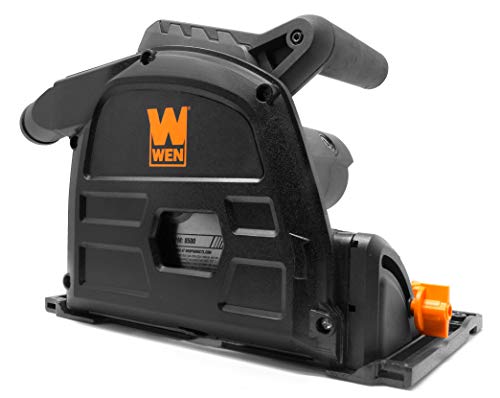
WEN CT1065 10-Amp 6.5-Inch Plunge Cut Sidewinder Circular Track Saw,Black
Check Amazon offerSide-by-side buying comparison
| Documented specification | WEN CT1065 | WEN CT1272 |
|---|---|---|
| Power | corded | corded |
| Blade diameter (mm) | 165 | 184.15 |
| Arbor (mm) | 20 | 15.88 |
| 90° depth on rail (mm) | 54 | Not confirmed |
| 45° depth on rail (mm) | 38 | Not confirmed |
| Rail system | WEN CT9502 | WEN CT9502 |
| Battery platform | Not confirmed | Not confirmed |
| Matched Amazon offer | Check Amazon offer | No exact offer matched |
Unconfirmed values are not equivalent specifications. Check the individual model sources and included package before choosing.
The model numbers matter more than a shortened title
WEN identifies CT1065 as a 10-amp 6.5-inch plunge track saw and CT1272 as a 12-amp 7.25-inch variable-speed saw. A generic listing titled WEN 7.25 track saw may instead refer to CT1274. Keep the specific model beside each capacity, blade requirement and accessory claim.
This is especially important for replacement parts and used purchases. Similar appearance does not establish that a flange, guard component or control is interchangeable. Look up the actual model documentation rather than selecting by blade diameter alone.
More depth is useful only when the work needs it
WEN’s CT1272 page advertises cutting workpieces up to 2.6 inches thick, while the CT1065 page advertises up to 2-1/3 inches. Treat those as stated product-page capacities and confirm the rail and angle conditions in the exact manual before applying them to a project.
For ordinary thin panels, the extra headline depth may not be the deciding benefit. For a thicker workpiece, it can become relevant, but a nominal maximum should not be treated as an instruction to operate at any depth in any material.
Variable speed is an application control
CT1272 is documented as variable speed. That provides a setting to use according to the material, blade and saw instructions; it is not a promise of a cleaner cut at every setting. Do not choose speed through guesswork or use a blade unsuitable for the tool.
If most of your work is one familiar sheet material, consider whether the additional control addresses a real requirement. The relevant question is whether the complete saw and blade arrangement is approved and suitable for the intended operation.
A common blade diameter does not prove blade fit
A 7.25-inch circular-saw blade is not automatically a correct track-saw replacement. Arbor, kerf, plate thickness, tooth design and speed rating need to meet the exact saw requirements. The same caution applies to 6.5-inch blades.
Before treating an existing blade collection as a saving, verify those dimensions and any riving-knife relationship specified by the manual. Do not modify mounting hardware to force a convenient blade onto the saw.
Used seven-inch listings need an identification check
Ask for the full model label when a seller describes only a WEN seven-inch saw. Keep CT1272 and CT1274 as separate records and check which manual, blade and rail claims belong to the offered machine. If the identifier cannot be resolved, the purchase comparison remains incomplete. This matters even when both offers look similar in photographs: replacement-part identity and the documented controls should be established before price or apparent condition decides the sale.
Compare the rail-ready totals
Price the two saws with the rail arrangement, connectors, clamps and extraction interface required for the same cut list. If the CT1065 meets every requirement, a larger blade is not automatically worth extra spending. If CT1272’s documented capacity or controls solve a specific need, that is a meaningful reason to consider it.
If only CT1274 appears in a current offer, evaluate that model on its own documentation instead of presenting it as CT1272. Preserve a clear path from the comparison title to the product being sold. Accurate identification is more useful than forcing every WEN seven-inch listing into one bucket.
Questions about WEN CT1065 vs CT1272: 6.5 or 7.25 Inch Track Saw
Are CT1272 and CT1274 the same model?
No. They have distinct model identifiers and documentation. Do not merge their specifications or substitute one offer without explaining the difference.
Should I buy the larger WEN for plywood?
Only if its documented features address your needs. Thin sheet work does not automatically require the larger blade; compare the complete setup.
Can I use any 7.25-inch blade in CT1272?
No. Confirm the exact arbor, kerf, plate, rating and other manual requirements in addition to diameter.