Track Saw Comparisons
Bosch GKT13-225L vs Makita SP6000J: Corded Kits
Bosch GKT13-225L and Makita SP6000J are corded plunge-saw candidates for a buyer who does not need battery power. The decision should focus on the exact rail arrangement, required accessories and complete project cost. Their motor labels alone do not establish a performance winner. This guide uses manufacturer documentation and has no claimed hands-on comparison.
As an Amazon Associate I earn from qualifying purchases. How affiliate links work.
Offers beside the comparison
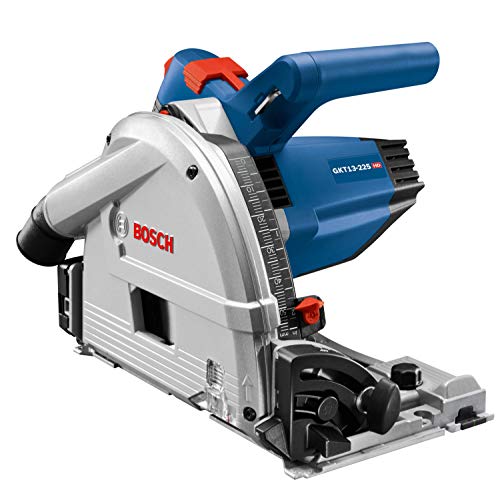
Bosch Tools Track Saw - GKT13-225L 6-1/2 In. Precision Saw with Plunge Action & Carrying Case
Check Amazon offer
Makita SP6000J 6-1/2-Inch Plunge Circular Saw
Check Amazon offerSide-by-side buying comparison
| Documented specification | Bosch GKT13-225L | Makita SP6000J |
|---|---|---|
| Power | corded | corded |
| Blade diameter (mm) | 165 | 165 |
| Arbor (mm) | 20 | 20 |
| 90° depth on rail (mm) | Not confirmed | Not confirmed |
| 45° depth on rail (mm) | Not confirmed | Not confirmed |
| Rail system | Bosch FSN | Makita plunge-saw rail |
| Battery platform | Not confirmed | Not confirmed |
| Matched Amazon offer | Check Amazon offer | Check Amazon offer |
Unconfirmed values are not equivalent specifications. Check the individual model sources and included package before choosing.
Two corded saws, two system inventories
The Bosch GKT13-225L package is documented with a blade and L-BOXX case; rails are an additional system consideration. Makita offers SP6000J configurations whose included equipment also needs checking. Compare the selected package identifiers rather than every item shown in product-family photography.
Make a short inventory for each: saw, suitable guide span, connectors if required, clamps, extraction interface and support. This turns a vague brand comparison into a clear list of what remains to buy.
The existing rail question can settle value
If you already own a supported rail system, investigate whether the proposed saw can use it with its intended features. A rail groove that appears similar does not confirm complete compatibility. Count reused equipment only after the exact combination is documented.
For a first system, compare the required long-cut arrangement rather than merely the shortest starter rail. A kit that handles crosscuts may need another purchase for full-length sheet work. Include the manufacturer’s required travel allowance at each end.
Extraction affects how the saw feels in use
Bosch documents a swiveling hose port on the GKT13-225L. That is a concrete detail to consider when planning the hose path, but it does not establish dust-collection superiority over the Makita. The extractor, hose fit and cut conditions also matter.
Place the proposed extractor where it would stand during work and consider the complete travel. A snagged hose or cable can interrupt any saw. Sometimes the best upgrade is a clearer route or appropriate connection rather than a different tool body.
Input power is not a finished-edge rating
Comparing amperage can identify an electrical requirement, but it does not tell you which setup makes the best cabinet edge. Blade selection, cutting condition and alignment influence the outcome. No-load speed likewise should not be converted into an unsupported ranking of real cutting speed.
For visible material, test the exact blade and support arrangement on matching scrap. Inspect size, squareness and the face that matters before cutting the final component. This verification remains useful whichever brand you choose.
Compare storage around your actual transport
A case can protect a saw and organize its small accessories, but it does not solve storage for a long rail. Measure the vehicle or cupboard where both pieces of equipment must fit. Also consider whether the case layout suits how you move between the bench and the job. A convenient storage system can be a legitimate tie-breaker once both saws meet the cutting requirements. It should not outweigh an unresolved rail capacity or compatibility question just because a package looks tidy in a product photograph.
When each candidate makes sense
Investigate Bosch when its supported rail accessories, case arrangement and connection details fit the shop you are assembling. Investigate Makita when the SP6000J system meets the same cut list with less additional equipment or a more convenient existing setup. Neither is labeled universally superior here.
If both meet the requirements, compare current equivalent package prices and manufacturer service options. Be cautious with used listings that omit rails or show damaged guide surfaces. A complete, sound system is a more useful purchase than a prestigious saw with unresolved compatibility or missing parts.
Questions about Bosch GKT13-225L vs Makita SP6000J: Corded Kits
Is GKT13-225L cordless?
No. This comparison concerns the corded Bosch model. Bosch cordless GKT18V models require their own specifications.
Does a larger amp rating mean a cleaner cut?
No. It does not establish finish quality or a matched-condition performance winner.
Can I compare saw-only prices directly?
Only after adding the accessories required to put both systems into the same working condition.