Track Saw Blades & Accessories
Track Saw Squares: Choose the Right Rail and Reference
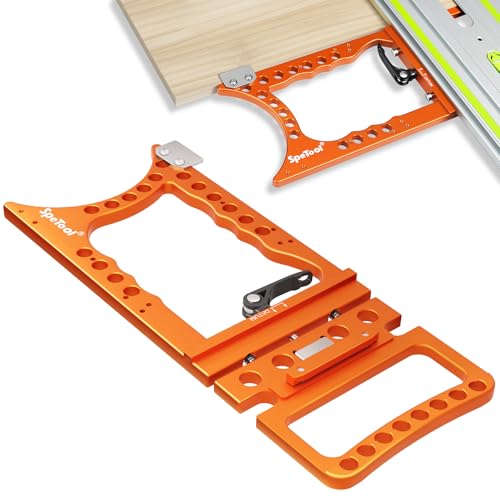
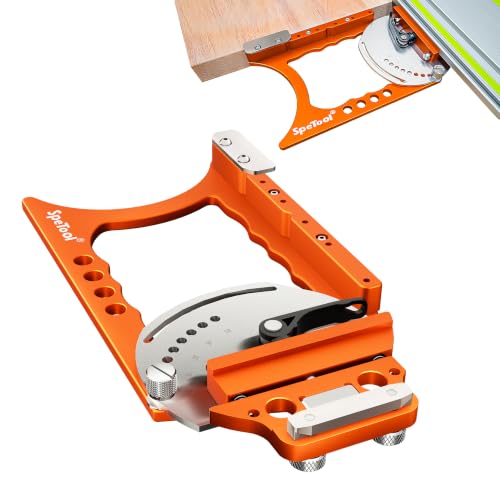
A track saw square positions the rail at a right angle to a reference edge. It is most useful when that edge is straight and the rail system is compatible. The accessory cannot turn a rough or bowed panel edge into a reliable reference, and the wrong mounting version cannot be corrected by extra tightening.
As an Amazon Associate I earn from qualifying purchases. How affiliate links work.
Inspect the relevant offer

Bosch FSNWAN Track Miter Guide
Check Amazon offerBuy the version for your rail
TSO offers several guide-rail square variants rather than one fitting for every system. Its GRS-16 PE v2 page names a particular supported group, while other products address different profiles. Read the exact version and exclusions before ordering. A square advertised broadly as fitting popular track saws may have a selector for the actual rail family. Confirm that selection in the cart. The tool’s own brand is less important than the rail surface that the square physically references.
A right angle needs a trustworthy first edge
The square registers against an existing material edge, so damage or curvature there carries into the new cut. Establish and inspect a suitable straight reference before relying on repeatable crosscuts. Mark it clearly on the panel. A factory edge can be convenient, but its condition still deserves checking. Dust or a trapped chip at the contact point can also change registration. Keep the reference and the square’s contact surface clean without moving fingers near an active blade path.
Check seating before checking the number
Follow the maker’s mounting instructions and confirm that the square is fully seated against the intended rail surfaces. A partially engaged clamp can appear secure while holding the device at an angle. Inspect for burrs, contamination or accessory interference if the fit is not consistent. Do not machine the square or rail to make an unlisted combination work. With the saw disconnected, verify that the mounted accessory leaves its travel and any required rail engagement unobstructed.
Use a sample cut to validate the whole arrangement
Make a test on suitable scrap and evaluate the resulting angle with a dependable reference. If the result is wrong, investigate the material edge, square seating, rail straightness and saw setup separately. Repeatedly adjusting the accessory without identifying the source can hide one error with another. Record the working configuration once it is correct. Recheck after the rail is dropped, transported roughly or switched to a different mounting accessory. A previous accurate cut does not certify every later setup.
Distinguish a square from parallel guides
A square answers the angle question: how should the rail sit relative to an edge? Parallel guides answer a width question by referencing another edge at a repeated distance. They can complement each other, but one is not an automatic replacement for the other. If most work involves repeated narrow panels, width guides may be the more useful upgrade. If the task is cutting cabinet sides to length from a straight edge, a square may remove more layout work.
Judge convenience by the actual project sequence
The value of a square grows when you repeatedly move the rail for similar crosscuts. For an occasional single cut, careful measurement and a checked setup may be sufficient. Consider the space the square occupies during transport and whether it interferes with other accessories. Some users prefer to keep it mounted to a dedicated rail; others need quick removal. Choose a documented arrangement that fits your routine rather than collecting multiple versions without a reason to use them.
Questions about Track Saw Squares: Choose the Right Rail and Reference
Will a track saw square make every cut square?
Only when the square fits and seats correctly, the reference edge is suitable and the rest of the cutting system is aligned. It cannot correct a curved reference edge or bent rail.
Is a TSO square universal?
Check the exact model. TSO sells different versions for different rail systems, so the family name alone is not a complete compatibility statement.
Should I buy a square or parallel guides first?
Choose based on the repeated task. A square helps set right-angle crosscuts; parallel guides help reproduce widths from an edge. Neither replaces stable support and a valid reference.